The 6 Steps of Planning (Plus Key Benefits & Limitations)
What is the single most important function of management? Many experts point to planning. According to legendary management theorists Koontz & O’Donell, “Planning is deciding in advance what to do, how to do it and who is to do it. Planning bridges the gap between where we are to where we want to go. It makes possible things to occur which would not otherwise occur.”
In short, planning is the blueprint for success. It’s a systematic process that turns abstract goals into an actionable roadmap. Let’s break down the essential steps, benefits, and realistic limitations of this crucial management function.
The 6 Steps in the Planning Process
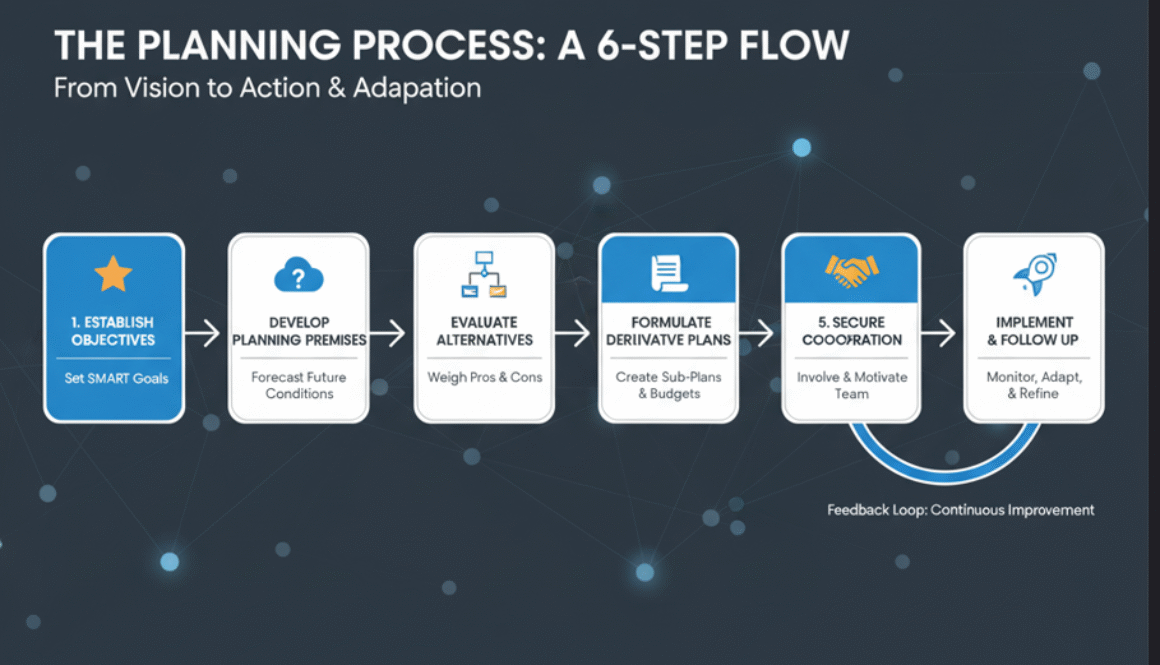
Effective planning follows a logical sequence. Each step builds upon the last to create a comprehensive and robust plan.
🎯 Step 1: Establish Clear Objectives
The journey of planning begins with a destination. You must first set clear, specific, and achievable goals. These objectives provide a reason for the plan and a direction for all efforts. Where possible, objectives should be quantitative (e.g., increase sales by 15% in the next quarter). However, they should also align with broader qualitative goals, such as improving brand reputation. The key is to ensure all objectives are practical, acceptable, and workable.
🗺️ Step 2: Develop Planning Premises
Planning premises are the assumptions you make about the future business environment. This step involves forecasting and identifying the conditions under which your plan will operate. You must ask: What are the potential obstacles? What market trends might affect us? By establishing these premises, you create a realistic basis for your plan and can proactively develop strategies to avoid or mitigate future challenges.
⚖️ Step 3: Identify and Choose Between Alternatives
Usually, there is more than one way to achieve an objective. In this step, you brainstorm and consider various courses of action. Each alternative must be thoroughly evaluated by weighing its pros and cons against the organization’s resources and requirements. After a scientific and objective evaluation, the best and most promising alternative is chosen.
🔗 Step 4: Formulate Derivative Plans
The main plan is just the beginning. Derivative plans are the sub-plans needed to support the primary goal. These include detailed policies, procedures, budgets, and schedules. For example, if the main objective is profit maximization, derivative plans would focus on sales maximization, production efficiency, and cost minimization. These plans detail the “who, what, and when” for accomplishing various tasks.
🤝 Step 5: Secure Buy-In and Cooperation
A plan is useless without the people who will execute it. It is crucial to take subordinates and team members into confidence. Involving them in the process has two major benefits:
-
It motivates them by making them feel like part of the decision-making process.
-
You can gain valuable suggestions and insights that improve the plan’s quality and implementation. When employees are invested in the plan, they are far more interested in its successful execution.
🔄 Step 6: Implement, Monitor, and Adapt (Follow Up)
This is where the plan is put into action. But it doesn’t stop there. Effective planning requires continuous monitoring of its effectiveness. By gathering feedback and appraising progress, management can correct any deviations or modify the plan as needed. This follow-up process ensures that the plan remains relevant and that the organization learns from its experience to make future plans even more realistic.
The Tangible Benefits of Planning
Planning is more than just an administrative task; it’s a strategic advantage that delivers real benefits.
-
Laser Focus on Objectives: Planning forces an organization to clearly define its goals, keeping everyone’s attention on the desired end results.
-
Reduces Uncertainty and Risk: By looking to the future and anticipating change, planning helps minimize uncertainties and prepares the organization to handle challenges effectively.
-
Better Utilization of Resources: Planning ensures that all resources—human, financial, and physical—are identified and used in the most efficient and effective way possible.
-
Drives Coordination: When everyone is working from the same blueprint, efforts are naturally coordinated. This prevents duplication of work and ensures all departments are pulling in the same direction.
-
Facilitates Delegation: A clear plan makes it easier to delegate authority. When goals and responsibilities are clearly defined for individuals and teams, managers can confidently empower them to get the job done.
⚠️ A Reality Check: The Limitations of Planning
Despite its advantages, planning is not a magic bullet. It’s important to be aware of its limitations.
-
Dependent on Forecasting Accuracy: A plan is only as good as the assumptions (forecasts) it’s built on. Since the future is inherently uncertain, even the best-laid plans can be disrupted by unforeseen events.
-
The Ego Trap: Sometimes, planning can be driven by the personal prestige of a leader rather than the true goals of the organization. This “egoistic planning” wastes resources and produces no significant results.
-
Organizational Rigidity: Rigid company policies and procedures can sometimes get in the way of implementing a progressive plan. An organization must be flexible enough to adapt its internal processes.
-
A Resource-Intensive Process: Planning requires a significant investment of time, money, and effort. If a plan fails or only achieves limited success, these resources are wasted.
-
Creates a False Sense of Security: A detailed plan can sometimes make managers and employees complacent. They might stick rigidly to the plan and fail to see better opportunities or adapt to changing circumstances.
-
Vulnerability to External Factors: External constraints like new government regulations, economic shifts, or actions by labor unions can severely limit a manager’s ability to execute a plan as intended.
-
Not Suited for Emergencies: Planning is a time-consuming, deliberate process. In a crisis or emergency that requires an immediate on-the-spot decision, a formal planning process is often too slow and unsuitable.